





Programmable staking on Solana arrives at Stakely with Pye
At Stakely, we’re taking staking on Solana one step further. We've partnered as a validator partner with Pye, a native protocol on the network that introduces the concept of programmable staking — a new way to structure staking positions without breaking the fundamental relationship between delegators and validators.
This partnership allows our stakers to access a model that expands the possibilities of traditional staking, while keeping its core pillars intact: security, direct stake, and reward generation.
In this article, we explain what Pye is, what limitations it solves within Solana staking, and why this model represents a turning point for stakers with more advanced needs.
The limitations of traditional staking on Solana
Staking SOL has historically been a simple process: the staker locks up their capital, stake it to a validator, and receives rewards over time. This model has proven effective for securing the network, but it comes with one key limitation.
Once stake is done, the position becomes rigid. The capital is locked, and rewards accumulate uniformly, without the ability to adapt that position to specific needs related to liquidity, timing, or future value management.
For long-term holders, this may not be an issue—but for others, this lack of flexibility becomes an opportunity cost that’s hard to ignore.
What is Pye and how does it add a new layer to staking
Pye offers an evolution of traditional staking without removing it from its natural context. Instead of treating stake as a fixed and immutable position, it allows you to structure the stake from the start, defining how its economic value will be managed over time.
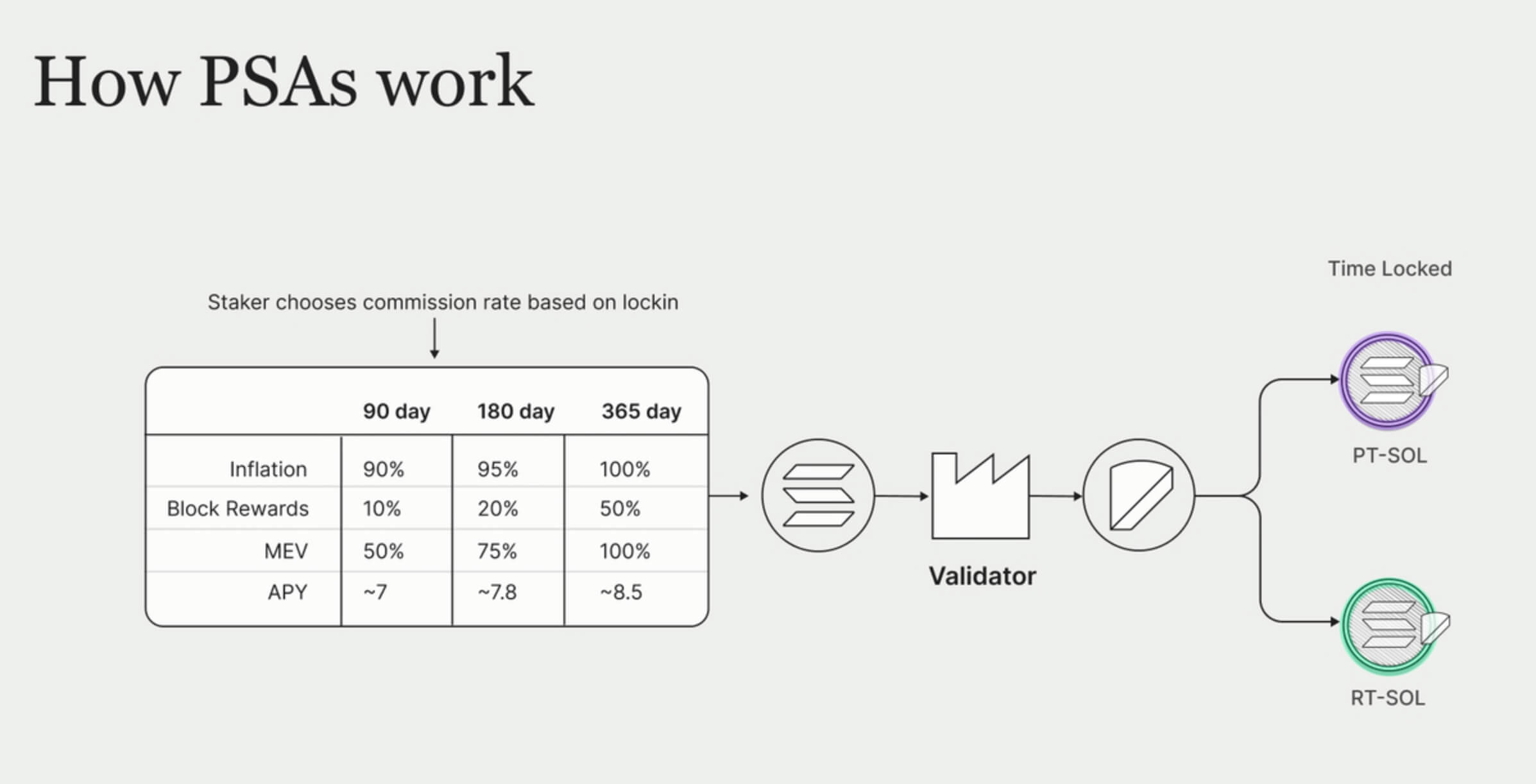
The SOL remains staked to validators, continues to secure the network, and generates rewards—but what changes is the degree of control the staker has over the position. Parameters like lock-up duration, reward treatment, or future value distribution are defined upfront, creating positions tailored to different goals.
This approach allows the exploration of new strategies without leaving staking behind or relying on external solutions outside Solana’s validator ecosystem.
How Pye’s programmable staking works
From a technical perspective, Pye allows validators to create and manage structured staking accounts whose economic terms are defined from the beginning. In return, the staker receives a position that represents their locked stake under those specific conditions.
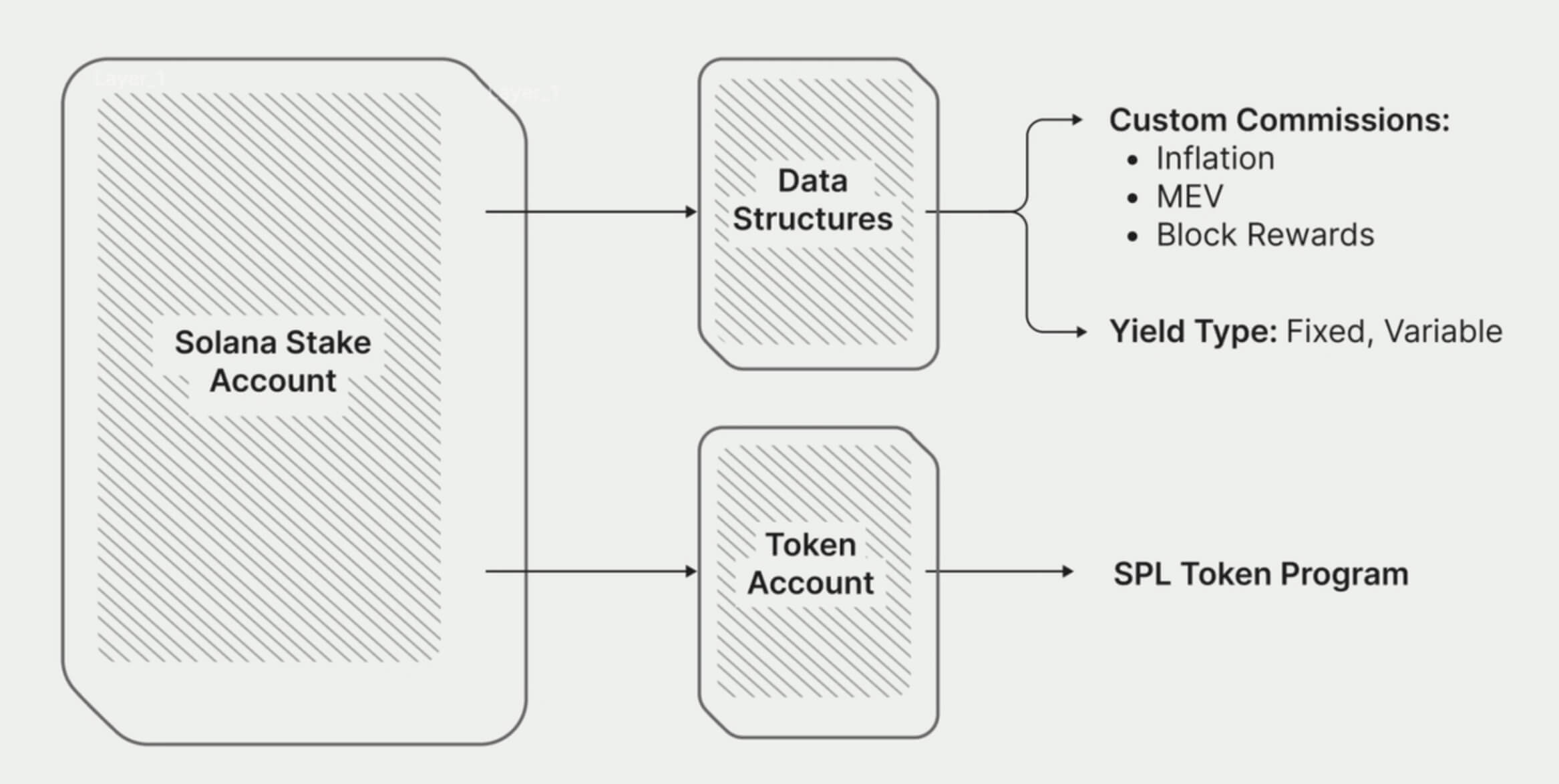
One of the key elements of the protocol is the conceptual separation between the staked capital and the future rewards that stake will generate. This distinction is materialized through:
- The principal token (PT) representing the staked SOL and its lock-up period.
- The reward token (RT) representing the future rewards associated with that stake.
Thanks to this separation, the staker can manage the economic value of their position more precisely—anticipating needs or adjusting exposure to rewards without breaking stake or switching validators.
Stakely’s role as a Pye partner
At Stakely, we're actively participating as a partner in this early stage of the protocol. We’ll provide ongoing feedback on market structure, risk identification for stakers, and proper alignment of incentives between stakers and validators in the long term.
As Pye progressively enables new markets, we’ll help define best practices and ensure that programmable staking integrates seamlessly within the Solana ecosystem.
Join Pye with Stakely
If you'd like to participate in Pye through Stakely, you can deposit directly from the official protocol interface.
Pye terms at a glance:
- Deposit window:
- Opens: February 9, 2026, 23:01 UTC
- Closes: March 10, 2026, 22:59 UTC
Lock-up duration:
- 3 months, until May 9, 2026, 22:01 UTC
Fees:
- 0% fee for the user
Additional user rewards:
- Inflation rewards: 100%
- MEV rewards: 100%
- Block rewards: 90%
What’s next
Pye is currently in its beta phase — a key moment where programmable staking is starting to take shape within Solana. This stage allows for the exploration of new staking structures without compromising the delegation and security principles that underpin the network, opening the door to more advanced and predictable models.
For delegators, this represents a new way of engaging with staking on Solana: more flexible, more structured, and tailored to different timeframes and profiles — all seamlessly integrated into the validator system.
Explore how programmable staking works with Pye by depositing through Stakely and start structuring your staking with a long-term vision.
Frequently asked questions for stakers
Am I still staking SOL with Pye?
Yes. The SOL remains staked to a validator and continues to generate rewards.
Do I lose control over my stake?
No. The position is structured differently but remains tied to your stake and the terms defined from the beginning.
Is this the same as liquid staking?
No. Pye does not create a liquid token that replaces the stake—instead, it creates a programmable structure over locked staking accounts.