





Ethereum's institutional adoption enters its infrastructure phase
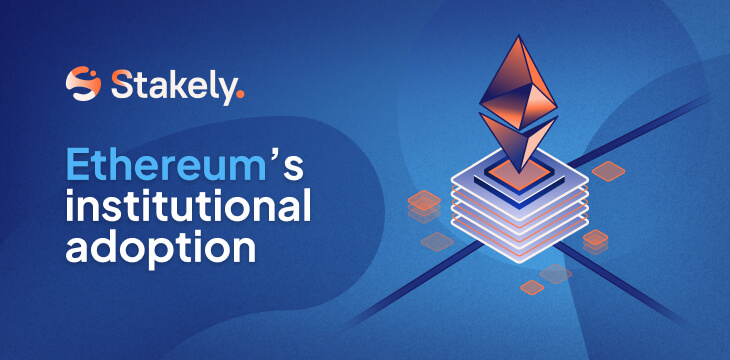
For years, Ethereum's institutional adoption has been measured through its most visible signals: banks testing tokenization, asset managers launching products, stablecoins growing on public infrastructure, and large organizations incorporating ETH into their strategies.
All of that matters, but it only tells part of the story.
The more interesting shift is happening underneath. In just a few weeks, new organizations focused on research, institutional engagement, privacy, and technical execution have emerged. Viewed separately, they may look like independent initiatives. Together, they reveal something deeper: Ethereum is building the capabilities institutions need to move from studying the network to using it as infrastructure.
The conversation is no longer only about which institutions are entering Ethereum, but whether Ethereum has the technical and operational conditions they need to build on it.
From institutional interest to production requirements
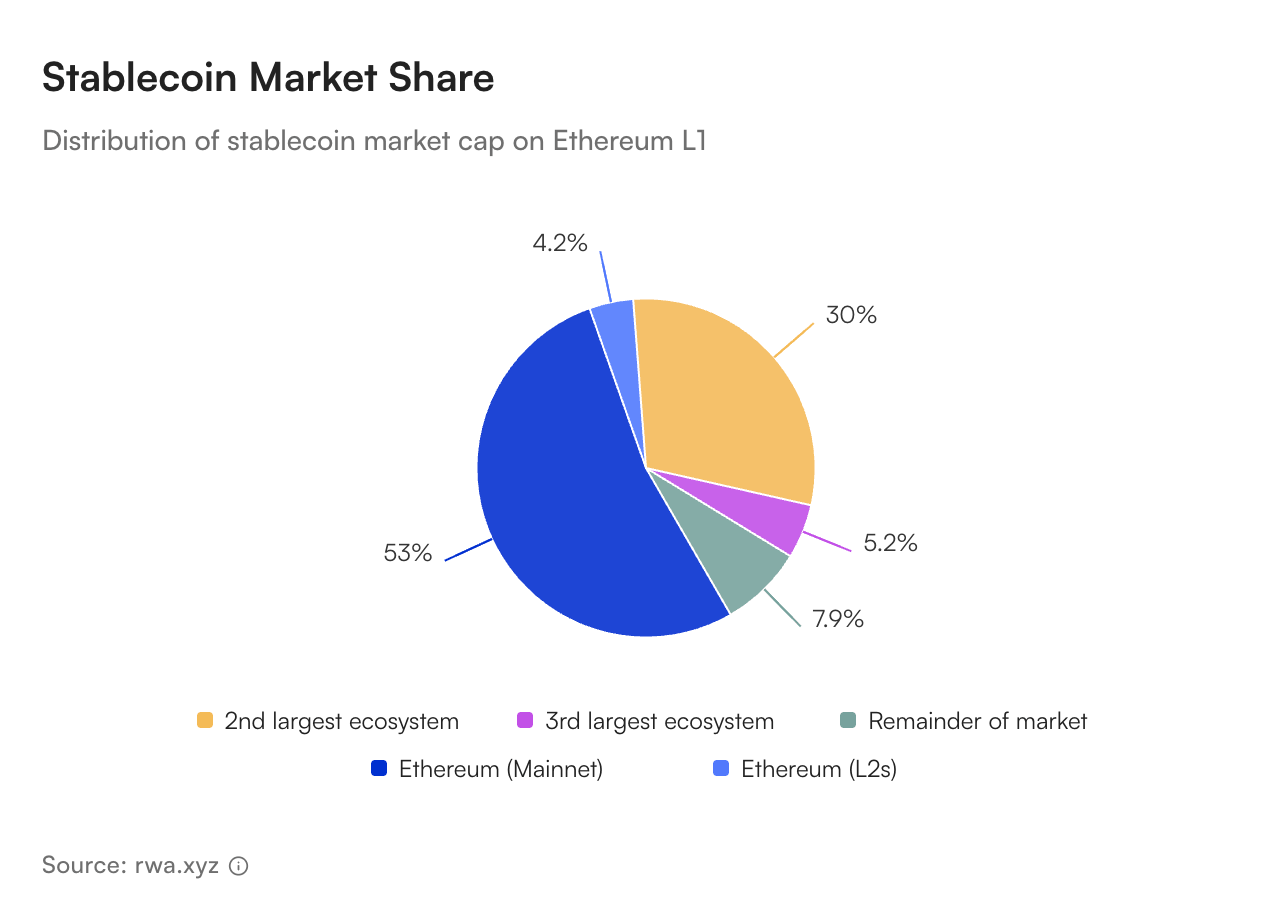
By mid-July 2026, Ethereum and its L2s accounted for 52% of tokenized real-world assets and $172 billion in stablecoins. These are significant figures, but onchain activity does not remove the requirements faced by regulated organizations.
When a bank, asset manager, custodian, or market infrastructure provider evaluates Ethereum, it needs to address much more concrete questions:
- which information can remain public and which must stay confidential;
- how to integrate compliance controls without creating a completely closed system;
- which infrastructure to use to operate reliably;
- how to manage custody, staking, liquidity, and technical risks;
- which availability, monitoring, and traceability guarantees it can require;
- who assumes responsibility when a proof of concept moves into production.
This is where adoption stops being a narrative and becomes a question of architecture, processes, and infrastructure.
A new division of work around Ethereum
The Ethereum Foundation is also changing how it organizes its work. Its new structure distributes responsibilities across areas dedicated to the protocol, access, users, the community, and institutions.
The Foundation therefore retains its own institutional layer. Its role is not limited to core protocol development: it also works on standards, reference architectures, and ways of integrating Ethereum while preserving properties such as censorship resistance, open source, privacy, and security.
At the same time, independent organizations with more specific mandates are emerging:
-
EthLabs, unveiled on June 22, 2026, is a nonprofit research and development lab. Its work connects the needs of users, applications, infrastructure providers, and institutions with protocol improvements, standards, and shared products.
-
Ethereum Institutional, launched on July 1, acts as a neutral entry point for institutions. Its work focuses on education, relationships, market intelligence, and coordination with different participants across the ecosystem.
-
EthSystems, unveiled on July 14, is an engineering and research company specializing in confidential systems. Its role begins when an institution needs to turn privacy and compliance requirements into an architecture, proof of concept, or production-ready implementation.
-
Etherealize was already working in this direction through products and services related to tokenization, settlement, privacy, and the connection between Ethereum and traditional financial markets.
What is clear is that specialization is increasing around problems that were previously distributed less clearly across the ecosystem.
Confidentiality becomes an infrastructure requirement
The launch of EthSystems helps explain why this specialization is necessary.
A public blockchain offers verifiability, shared settlement, and less dependence on a single counterparty. However, it can also expose positions, balances, counterparties, strategies, and transaction flows that an institution cannot make public.
The answer does not necessarily have to be a return to a private ledger where confidentiality depends solely on permissions and agreements between participants. Ethereum makes it possible to explore a different model: using public, verifiable infrastructure while cryptographically limiting access to sensitive information.
This can include:
- selective disclosure to reveal only the required data;
- zero-knowledge proofs to demonstrate that certain conditions have been met without publishing the underlying information;
- viewing keys with defined permissions;
- confidential transfers and settlement;
- systems that authorized parties can audit;
- architectures that combine privacy, security, and integration capabilities.
Privacy and compliance are not opposing concepts in this context. For an institution, privacy does not necessarily mean hiding a transaction from regulators or auditors. It means being able to determine who can access which information, under what conditions, and with what verification capabilities.
EthSystems also arrives with previous technical work. The team that operated the Institutional Privacy Task Force has published proofs of concept covering private bonds, confidential stablecoin transfers, private cross-chain atomic swaps, and validium architectures verified on Ethereum.
This does not mean there is a universal solution or that these technologies are ready for every deployment. It does show that the conversation is moving from general principles toward concrete architectures, trade-offs, and implementations.
Institutional adoption also depends on operations
Privacy, standards, and institutional engagement solve important parts of the problem. However, none of these layers replaces the infrastructure that keeps Ethereum operational.
When financial activity moves into production, requirements increase around:
- validator reliability;
- consensus and execution client diversity;
- RPC node availability;
- monitoring and incident response;
- readiness for network upgrades;
- secure key management;
- integration with custody environments;
- reporting and verifiable operational processes.
Client diversity on Ethereum, for example, may appear to be an internal operator decision. In practice, it reduces common dependencies and helps prevent a failure in a particular implementation from affecting a significant part of the network in a correlated way.
The same applies to staking. For an institution, it is not enough for Ethereum to run on Proof of Stake. It needs to understand how validators are operated, which risks exist, how their performance is monitored, and which controls are applied by the operator responsible for the infrastructure.
Where Stakely fits
At Stakely, we are participating in this evolution from the layer we know best: blockchain infrastructure operations.
We also believe Ethereum needs a clearer relationship with institutions. Not to turn the network into closed infrastructure, but to make its properties understandable, assessable, and usable within environments with demanding technical and regulatory requirements.
That is why we view the emergence of specialized teams positively. Ethereum Institutional, EthLabs, EthSystems, and other organizations do not replace operators or the Ethereum Foundation. They add different capabilities to an ecosystem that will need to coordinate research, privacy, implementation, and operations if it is to support institutional activity at scale.
Infrastructure built layer by layer
Ethereum's institutional phase will not arrive through a single announcement, organization, or financial product.
It will be built layer by layer: protocol, education, privacy, standards, custody, applications, and operations. Each one solves a different part of the same problem.
The emergence of more specialized organizations shows that the questions are changing. The ecosystem is no longer only trying to demonstrate that institutions are interested in Ethereum. It is starting to work on what they need to use it responsibly and in production.
Ethereum provides the public rails. Confidential systems protect the information that should not be exposed. Reliable infrastructure keeps the whole system running.
Those who want to participate directly in securing the network can explore the Ethereum staking options available with Stakely.